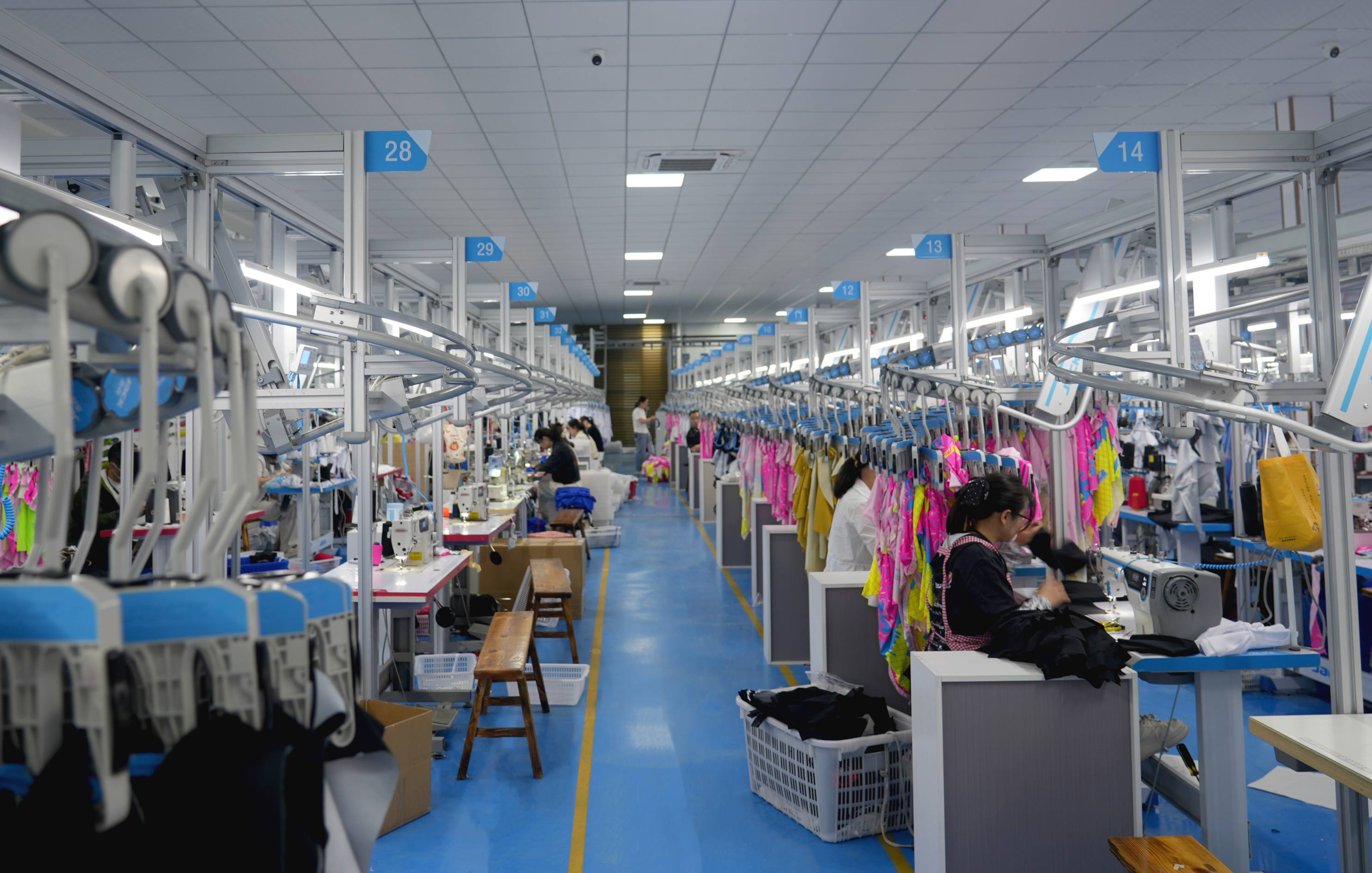
A reliable period underwear manufacturer needs to control far more than sewing quality. Buyers should review absorbency consistency, waterproof-layer integrity, wash durability, chemical compliance, sizing tolerance, traceability, production capacity, and inspection records. A 2023 production lot of 10,000 pieces can become expensive if even a 2% defect rate creates 200 leaking or poorly fitted garments. Reliability is better measured by repeatable batch performance than by one good pre-production sample. Manufacturers should document fabric lots, approved specifications, wash-test conditions, inspection sampling, and material changes so a buyer can compare one order with the next.
Period underwear normally combines several materials within a gusset that may be only a few millimeters thick. A common construction uses a skin-contact layer, one or more absorbent layers, and a leak-resistant membrane, followed by the outer fabric. If a factory handles 5,000 pieces across five sizes, a small change in gusset position or elastic tension can affect hundreds of garments before final inspection catches it. Manufacturers therefore need controlled patterns, cutting tolerances, sewing specifications, and approved reference samples rather than relying on an operator's judgment.
Material control follows naturally from construction control because the same pattern can perform differently when the textile changes. Fabric weight, fiber composition, stretch, recovery, thickness, lamination, and finishing can affect fit and fluid handling. If an approved body fabric contains 15% elastane, replacing it with a visually similar fabric containing 10% elastane may change recovery around the leg opening. Buyers should require approval before substitutions and should record supplier, composition, color reference, fabric lot, and applicable test documentation for each important material.
A supplier saying that two fabrics are "basically the same" is not enough for a reusable hygiene garment. The buyer needs specifications that can be checked again six or 12 months later.
Traceability becomes more useful as order volume grows. In a 20,000-unit order, the body fabric, membrane, absorbent textile, elastic, thread, labels, and packaging may come from separate production lots. A reliable factory should be able to connect finished cartons with production dates and relevant material batches. If complaints later affect 120 garments from one shipment, lot records help determine whether the affected units shared the same membrane, lamination batch, sewing line, or production period rather than treating all 20,000 garments as identical.
That traceability should extend into chemical management. Period underwear remains in prolonged contact with skin, so buyers selling in Europe should review applicable requirements under the EU REACH framework, while products marketed in the United States need specifications appropriate to their materials, labeling, claims, and sales channel. REACH entered into force in 2007 and has been updated repeatedly as substances and restrictions have changed. A report should identify the tested material, test method, date, laboratory, measured result, and applicable limit; a certificate without sample identification has limited purchasing use.
Chemical documentation does not replace physical performance testing. Absorbency claims such as 20 mL, 30 mL, or 40 mL are difficult to compare when suppliers use different procedures. One laboratory may test a cut gusset specimen until saturation, while another evaluates a finished garment under controlled application rates. Buyers should specify the test area, liquid, application method, conditioning, measurement method, and number of specimens. A five-sample test is more informative than a single favorable specimen because variation between pieces becomes visible.
Absorption speed deserves separate attention from maximum capacity. A gusset that eventually holds 30 mL may still leak during use if fluid reaches the surface faster than the textile can transfer and distribute it. Product development should therefore consider intake rate, spreading area, rewet, edge leakage, and membrane performance together. When five prototypes use different absorbent structures, recording the same measurements for all five gives the buyer a more useful comparison than labels such as "medium" or "heavy."
Capacity numbers need test conditions beside them. A "30 mL" claim without a defined method cannot be treated as equivalent to another manufacturer's 30 mL claim.
Once the absorbent structure has been selected, repeated washing becomes the next manufacturing test. Period underwear is purchased as a reusable garment, so performance after 20, 30, or 50 wash cycles can matter more than its condition on day one. Washing can change dimensional stability, elastic recovery, membrane adhesion, surface texture, and absorbency. Development samples should be measured before and after an agreed wash program, using the same detergent type, temperature, drying method, and conditioning procedure where practical.
Wash testing also exposes construction problems that visual inspection may miss. A membrane may look normal after five cycles but begin separating around seams after 30; elastic may lose recovery gradually rather than fail immediately. If ten garments are washed and two show the same delamination pattern, the factory should review bonding conditions, material compatibility, sewing pressure, or seam design before production. Repeated failure in the same location is a manufacturing issue to investigate, not cosmetic variation.
Fit then needs to be considered alongside wash performance because leakage can occur even when the absorbent materials pass laboratory tests. Leg openings, rise, gusset width, gusset length, and elastic recovery influence how closely the protected area stays against the body. A size range from XS to 3XL should not simply enlarge every dimension by one percentage. Grading needs to account for body proportions and material stretch, with tolerances assigned to measurements that affect coverage.
A practical specification might permit a small tolerance on a non-functional measurement while applying tighter control to gusset placement. If a 70 mm protected width is reduced by 5 mm through cutting or sewing variation, the change is about 7.1%. Whether that variation is acceptable depends on the approved design, but the manufacturer should measure it rather than assume it is harmless. Measurement records from multiple pieces and sizes are more useful than checking only one medium-size sample.
Sizing control leads directly to bulk-production consistency. Sample-room technicians may make 10 development pieces carefully, while a bulk order requires thousands of repeated operations across several workers and machines. Before cutting starts, the factory should have an approved bill of materials, measurement chart, construction sheet, artwork, packaging specification, color references, and signed sample. Version numbers matter: producing from specification V4 when the buyer approved V5 can reproduce an old mistake across an entire order.
A reliable supplier therefore controls changes formally. If the approved membrane becomes unavailable in 2026, production should not continue with a replacement merely because the supplier considers it similar. The buyer should receive the replacement specification, relevant test information, sample where necessary, price effect, and lead-time effect before approval. The same process should apply to absorbent fabrics, elastics, body fabrics, adhesives, and finishes when their properties can affect the finished garment.
Manufacturing records are also important during inspection. Final inspection should not be the first time quality is checked. Incoming fabric can be reviewed for width, shade, visible defects, weight or other agreed characteristics; cutting can be checked against patterns; sewing lines can monitor seam quality and measurements; packed goods can be sampled before shipment. If a factory discovers a 4% sewing defect rate after 8,000 pieces are finished, reworking 320 garments is more expensive than finding the same issue during the first production hour.
Inspection works better when it identifies a repeating process problem early. Counting defects at the end does not repair the process that produced them.
Sampling plans should also be agreed rather than described simply as "100% QC." Full visual inspection can still miss functional failures, while destructive tests cannot reasonably be performed on every garment. Buyers can define different checks for measurements, appearance, workmanship, packaging, wash performance, and functional testing. For a 10,000-piece shipment, the inspection sample should be selected across cartons, sizes, colors, and production periods rather than taking 50 convenient pieces from the top of one carton.
Documentation is especially useful when working with an OEM or private-label supplier such as Ljvogues, because product development may involve several rounds of fabrics, patterns, gusset structures, labels, and packaging. A buyer comparing three suppliers in 2026 should request the same information from each: material specifications, testing options, MOQ, sample timeline, monthly capacity, bulk lead time, inspection procedure, subcontracted operations, and change-control process. Comparable questions make quotations easier to evaluate.
Capacity figures deserve verification because total factory output can be misleading. A factory producing 300,000 garments per month may allocate only 10% of its lines to period underwear or other multi-layer products. Buyers should ask for capacity on the relevant construction, not total underwear capacity. If an order contains 60,000 pieces and the suitable line produces 2,500 pieces per day, the sewing requirement alone represents roughly 24 production days before allowing for cutting, inspection, packing, maintenance, or scheduling conflicts.
MOQ should be examined in the same practical way. A 3,000-piece minimum may originate from garment-line efficiency, but it may also come from a fabric mill's dyeing quantity, membrane lamination run, custom elastic, printed packaging, or color minimum. Those sources have different solutions. A buyer ordering 1,000 pieces in each of three colors may satisfy a 3,000-piece garment MOQ while still failing a material supplier's minimum for each individual color.
Cost comparisons are therefore useful only when specifications match. A quotation that is 12% lower can reflect manufacturing efficiency, but it can also use a lighter absorbent layer, different membrane, simpler stitching, standard rather than custom fabric, fewer tests, or basic packaging. Buyers should compare quotations line by line: body-fabric composition, gusset construction, trims, labels, packaging, testing, inspection, Incoterm, and order quantity. Comparing only the unit price leaves too many variables undefined.
Production lead time needs similar detail. "30 days" may refer only to sewing after all materials arrive, while the full schedule may include 15 days for fabric preparation, 30 days for production, and additional time for inspection and shipment. In a seasonal retail program, a two-week material delay can affect the entire delivery date. A dependable manufacturer separates material lead time, sample approval, bulk manufacturing, inspection, and dispatch instead of giving one optimistic number.
Factory capability should finally be checked through records and production-floor practices rather than presentation materials. During an audit, buyers can review how material rolls are identified, whether nonconforming goods are separated, how approved specifications reach sewing lines, and whether previous production records can be retrieved. Ask staff to trace one finished carton back to its production batch. If the exercise takes 30 minutes and still cannot identify the relevant material lot, traceability exists mainly on paper.
Supplier performance becomes easier to manage when buyers keep measurable records over several orders. A simple scorecard can track on-time delivery percentage, inspection failure rate, complaint rate, sample approval rounds, response time, and corrective-action closure. If Supplier A delivers 97% of orders on time with a 1.2% recorded defect rate while Supplier B delivers 82% on time with 3.8%, purchasing teams have a stronger basis for future allocation than sample appearance or unit price alone.
| Area to verify | Useful production evidence | Example measurement |
|---|---|---|
| Absorbency | Defined method and specimen records | 5–10 specimens per development comparison |
| Wash durability | Before/after measurements and performance checks | 20, 30, or 50 agreed wash cycles |
| Sizing | Measurement chart and tolerance records | Check several pieces across XS–3XL |
| Traceability | Material lot and finished-batch records | Trace carton → batch → material lot |
| Quality | Incoming, in-line, and final inspection records | Record defect percentages by order |
| Delivery | Planned versus actual shipment dates | Track on-time delivery over 12 months |
The strongest supplier relationship is built around repeatability. One approved sample represents one garment at one point in time; a commercial program may require 10,000, 50,000, or more pieces to match it across different sizes and later orders. Material specifications, controlled construction, quantified testing, wash records, inspection data, traceability, realistic capacity, and written approval of changes give buyers practical ways to judge whether a manufacturer can reproduce the product rather than merely make an impressive sample.